Short Sale vs. Foreclosure: Which Option Protects Your Credit More?
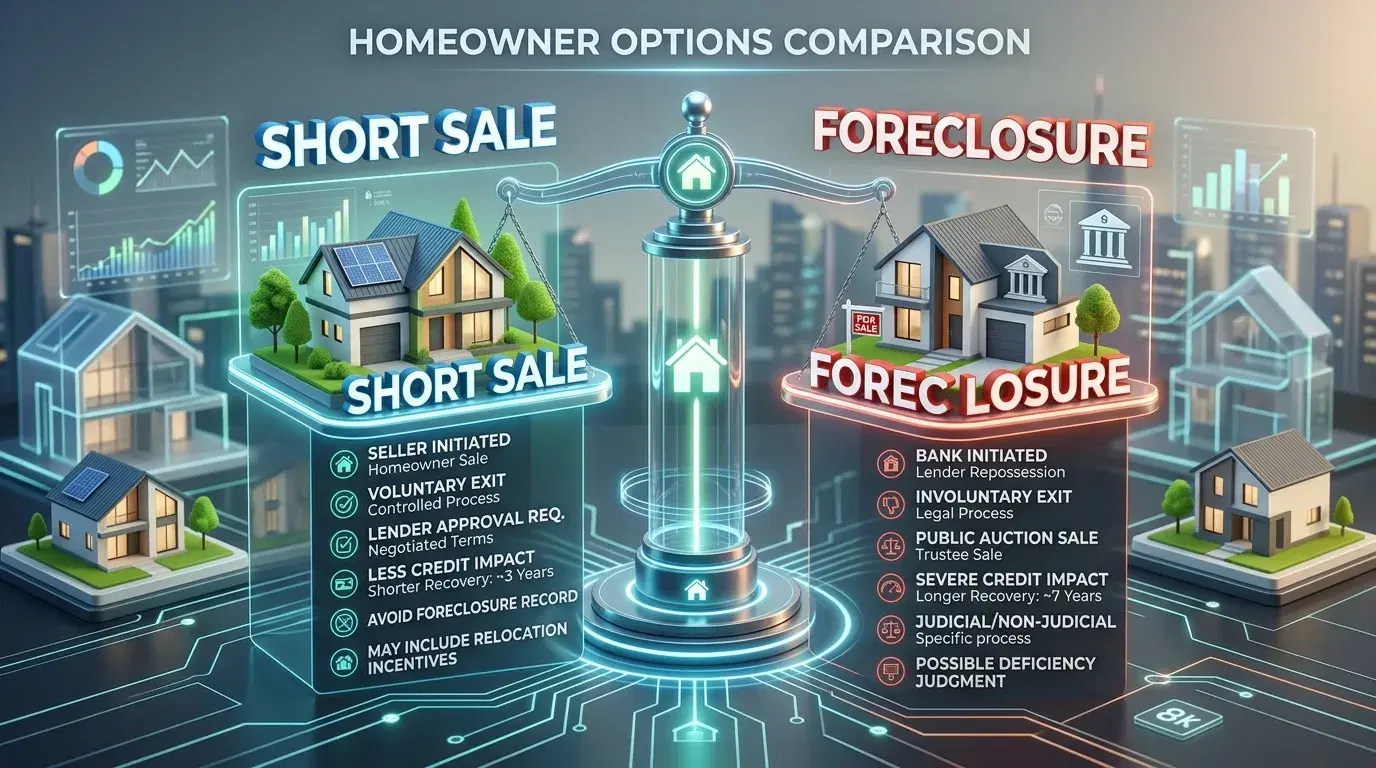
When you're struggling to make mortgage payments, the fear of foreclosure can be paralyzing. But here's what many New Jersey homeowners don't realize: you have options that can significantly reduce the damage to your credit and financial future.
Let me break down the real differences between short sales and foreclosure, and why acting early matters. (A short sale is one of several paths — I compare all of them on my NJ foreclosure options page.)
What Is a Short Sale?
A short sale happens when you sell your home for less than what you owe on the mortgage, with your lender's approval. The lender agrees to accept the sale proceeds as payment in full, releasing you from the remaining debt.
Example: You owe $350,000 on your mortgage, but your home is only worth $300,000 in today's market. In a short sale, the lender agrees to accept $300,000 and forgive the $50,000 difference.
What Is Foreclosure?
Foreclosure is a legal process where the lender takes possession of your home because you've stopped making payments. The home is then sold at auction, and you're evicted.
Timeline in New Jersey: Foreclosure typically takes 12-18 months from the first missed payment to eviction, but can take longer.
Credit Score Impact: The Numbers
This is where the difference becomes crystal clear.
Short Sale Impact:
- Credit score drop: 50-150 points
- Recovery time: 2-3 years before you can qualify for a new mortgage
- Stays on credit report: 7 years
- FHA loan eligibility: 3 years after short sale
Foreclosure Impact:
- Credit score drop: 200-400 points
- Recovery time: 5-7 years before you can qualify for a new mortgage
- Stays on credit report: 7 years
- FHA loan eligibility: 3 years after foreclosure (with extenuating circumstances)
The Bottom Line: A short sale typically causes 50-250 points less damage to your credit score than foreclosure.
Beyond Credit Scores: Other Consequences
Deficiency Judgments
In New Jersey, lenders can pursue a deficiency judgment after foreclosure, meaning they can sue you for the difference between what you owed and what the home sold for at auction.
Short Sale Advantage: Most short sale agreements include a waiver of deficiency, meaning you walk away with no remaining debt.
Future Employment
Some employers check credit reports, especially for positions involving financial responsibility. A foreclosure can be a red flag.
Emotional and Mental Health
Foreclosure is a public process that can feel humiliating. Short sales are more private and give you more control over the timeline.
Why Timing Matters
The earlier you explore a short sale, the more options you have. Here's the ideal timeline:
Best Time to Act: When you're 1-2 payments behind
- You still have negotiating power
- More time to find a qualified buyer
- Less damage to your credit
Still Possible: When you're 3-6 payments behind
- Lender may be more motivated to approve
- Need to move quickly
Getting Difficult: After foreclosure proceedings start
- Still possible, but timeline is compressed
- Lender may be less flexible
The Short Sale Process
- Contact your lender - Explain your hardship and request short sale approval
- Get pre-approved - Lender reviews your financial situation
- List your home - Work with an agent experienced in short sales
- Submit offers - Lender must approve the sale price
- Close the sale - Typically takes 60-90 days once approved
Common Myths About Short Sales
Myth #1: "I need to be behind on payments to qualify." Truth: Some lenders will consider short sales if you can prove imminent hardship, even if you're current.
Myth #2: "Short sales take forever." Truth: While they can take 3-6 months, this is still faster and less damaging than foreclosure.
Myth #3: "I'll owe taxes on the forgiven debt." Truth: The Mortgage Forgiveness Debt Relief Act may protect you from tax liability on forgiven debt (consult a tax professional).
When Foreclosure Might Be Your Best Option
In rare cases, foreclosure might make sense:
- You have no income and can't afford to maintain the property during a short sale
- You need maximum time in the home without making payments
- You're judgment-proof (no assets or income for lenders to pursue)
Take Action Today
If you're facing financial hardship and worried about losing your home, don't wait until foreclosure is inevitable. The earlier you act, the more options you have to protect your credit and financial future — see everything that's still possible at your stage on my foreclosure help page.
I've helped dozens of New Jersey homeowners navigate short sales successfully. The process isn't easy, but it's far better than the alternative.
Let's discuss your situation in a confidential, no-pressure consultation. Contact me today to explore your options.
Remember: This isn't about judgment. It's about finding the best path forward for you and your family.
Need Help With Your Real Estate Situation?
Whether you've inherited a property, facing foreclosure, or need to sell as-is, I'm here to help. Get a free, no-obligation consultation today.
Related Articles
Facing Foreclosure in New Jersey? Here Are Your Options
If you're dealing with foreclosure in New Jersey, you still have options. Here's what you need to know about the process and how to protect your equity.
Can I Sell My House During Foreclosure in New Jersey? Yes — Here's How
New Jersey homeowners can sell at any point before the sheriff sale — and if you have equity, selling is usually the smartest way to protect it. Here's how it works at every stage.
How to Stop a Sheriff Sale in New Jersey (Yes, There's Still Time)
A sheriff sale date on the calendar feels final — but New Jersey homeowners have real ways to delay or stop it, including adjournments, redemption, and selling before the sale. Here's what still works.
Need Help With Your Real Estate Situation?
Let's discuss your specific needs in a free, no-pressure consultation.
Contact Jose Today