New Jersey Foreclosure Timeline: What Happens at Each Stage
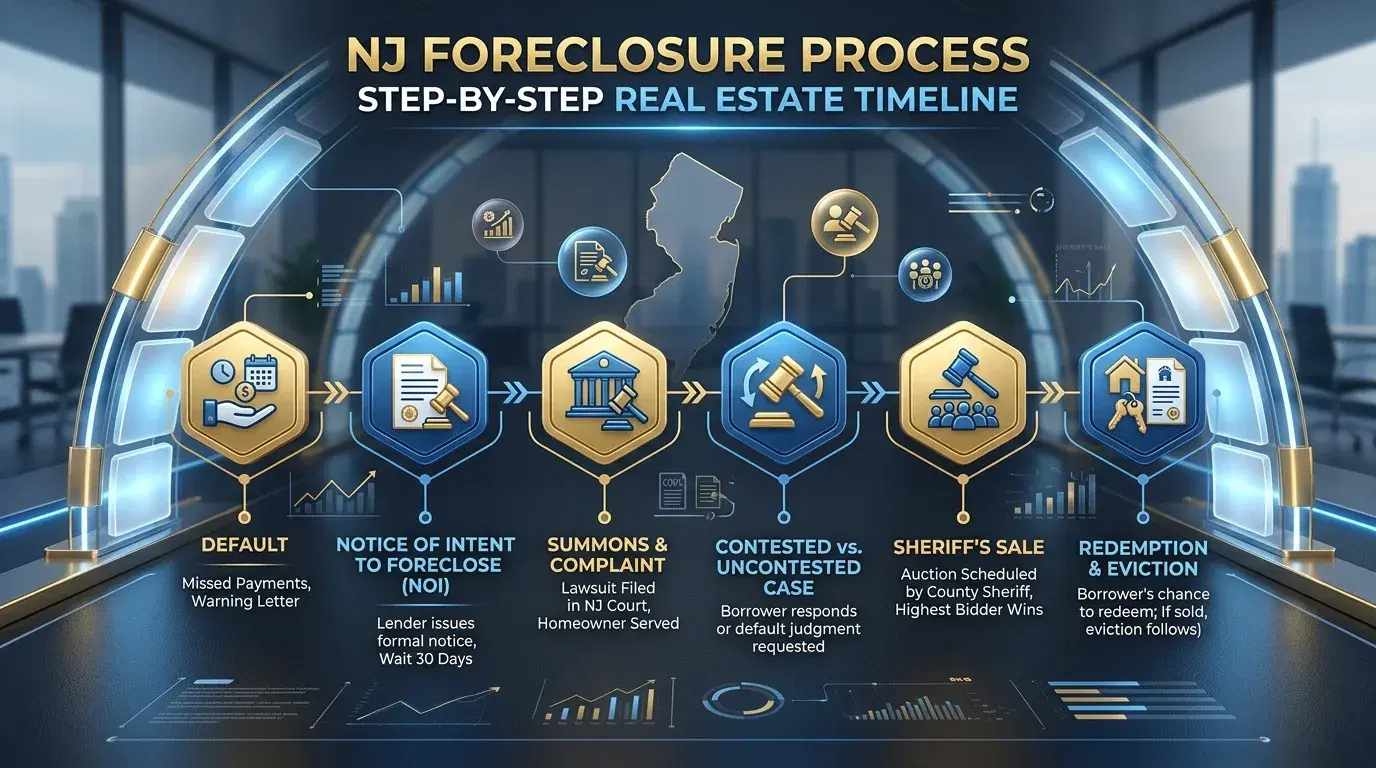
New Jersey consistently ranks among the states with the longest foreclosure timelines in the country. The average NJ foreclosure takes 3 to 5 years from the first missed payment to the final sheriff's sale — which means homeowners have far more time and options than most people realize.
But time only helps if you use it. Here's a stage-by-stage breakdown of how foreclosure works in New Jersey and what you can do at each point. (For a summary of every option — short sale, fast market sale, vetted cash buyers, loan modification — see my foreclosure options page for NJ homeowners.)
Stage 1: Missed Payments (Month 1–3)
Foreclosure doesn't start the moment you miss a payment. Most lenders won't begin formal proceedings until you're 90–120 days past due. During this window, your lender will contact you repeatedly — by phone, mail, and eventually certified letter.
What you can do:
- Contact your lender immediately and ask about forbearance or loan modification options
- Document every communication in writing
- Consult with a HUD-approved housing counselor (free service)
- Reach out to a real estate professional to understand your property's current value
This is the most important stage. The earlier you act, the more options you have.
Stage 2: Notice of Intent to Foreclose (Month 3–4)
Before filing a foreclosure complaint in New Jersey, lenders must send a Notice of Intent to Foreclose at least 30 days before filing. This notice must include information about housing counseling resources and your right to cure the default.
What you can do:
- Request a loan modification in writing
- Explore a short sale if you owe more than the home is worth
- Consider a deed in lieu of foreclosure (transferring the property to the lender to avoid foreclosure)
- List the property for sale — if you can sell before the complaint is filed, you avoid foreclosure entirely
Stage 3: Foreclosure Complaint Filed (Month 4–6)
If you don't resolve the default, the lender files a foreclosure complaint in the Superior Court of New Jersey in the county where the property is located. You'll be served with the complaint and have 35 days to respond.
What you can do:
- File an answer to the complaint — this is critical. Failing to respond leads to a default judgment.
- Raise any valid defenses (improper service, lender errors, loan modification in progress)
- Continue pursuing a short sale or loan modification — lenders can still accept these after filing
- Consult with a foreclosure attorney
Stage 4: Office of Foreclosure Review (Month 6–18)
New Jersey routes uncontested foreclosures through the Office of Foreclosure in Trenton, which reviews cases for procedural compliance. This administrative review adds significant time to the process — often 6–12 months on its own.
If you filed an answer, the case stays in the Superior Court and goes through the litigation process, which takes even longer.
What you can do:
- Continue negotiating with the lender — short sales and loan modifications can still be approved at this stage
- If you've decided to sell, list the property now. A sale can close before the foreclosure judgment is entered.
Stage 5: Final Judgment of Foreclosure
Once the Office of Foreclosure or the court approves the case, a Final Judgment of Foreclosure is entered. This sets the amount owed and authorizes the sheriff's sale.
After judgment, you have a 10-day redemption period to pay off the full amount owed and stop the foreclosure.
What you can do:
- A short sale can still be approved after judgment in some cases — contact your lender immediately
- If you have equity in the property, selling before the sheriff's sale protects that equity
Stage 6: Sheriff's Sale
The property is sold at a county sheriff's sale, typically held at the county courthouse. The winning bidder (often the lender) takes title to the property.
After the sheriff's sale, you have a 10-day right of redemption — you can reclaim the property by paying the full judgment amount plus costs.
What you can do:
- If you have equity, a last-minute sale before the sheriff's sale can still protect it
- After the sale, you may still have time to negotiate a cash-for-keys arrangement with the new owner
The Bottom Line
New Jersey's long foreclosure timeline is actually an advantage for homeowners — if you use it. Most families who lose their homes to foreclosure do so not because they had no options, but because they waited too long to explore them.
The most important thing you can do is act early and get informed. A short sale, loan modification, or strategic sale can protect your credit, preserve your equity, and give you control over the outcome.
Facing foreclosure in New Jersey? See which options are still open at your stage, or contact me today for a free, confidential consultation. I've helped NJ homeowners navigate every stage of the foreclosure process, and I can help you understand your real options before it's too late.
Need Help With Your Real Estate Situation?
Whether you've inherited a property, facing foreclosure, or need to sell as-is, I'm here to help. Get a free, no-obligation consultation today.
Related Articles
Can I Sell My House During Foreclosure in New Jersey? Yes — Here's How
New Jersey homeowners can sell at any point before the sheriff sale — and if you have equity, selling is usually the smartest way to protect it. Here's how it works at every stage.
How to Stop a Sheriff Sale in New Jersey (Yes, There's Still Time)
A sheriff sale date on the calendar feels final — but New Jersey homeowners have real ways to delay or stop it, including adjournments, redemption, and selling before the sale. Here's what still works.
Facing Foreclosure in New Jersey? Here Are Your Options
If you're dealing with foreclosure in New Jersey, you still have options. Here's what you need to know about the process and how to protect your equity.
Need Help With Your Real Estate Situation?
Let's discuss your specific needs in a free, no-pressure consultation.
Contact Jose Today