NJ Probate Timeline: What to Expect When Selling an Inherited Home
When a loved one passes away and leaves behind a home, most families are surprised to learn they can't simply sell it right away. In New Jersey, most inherited properties must go through probate — a court-supervised process that validates the will, settles debts, and legally transfers ownership to the heirs.
Understanding the timeline is critical. Every month the property sits in probate, the estate is paying taxes, insurance, and maintenance. Here's what you need to know.
What Is Probate in New Jersey?
Probate is the legal process by which a deceased person's estate is administered. In New Jersey, it's handled by the Surrogate's Court in the county where the deceased lived. The Surrogate's Court validates the will, appoints an executor (or administrator if there's no will), and oversees the distribution of assets.
Not all assets go through probate. Property held in a living trust, jointly owned property with right of survivorship, and accounts with named beneficiaries typically pass outside of probate. But real estate titled solely in the deceased's name almost always requires it.
The Basic Probate Timeline
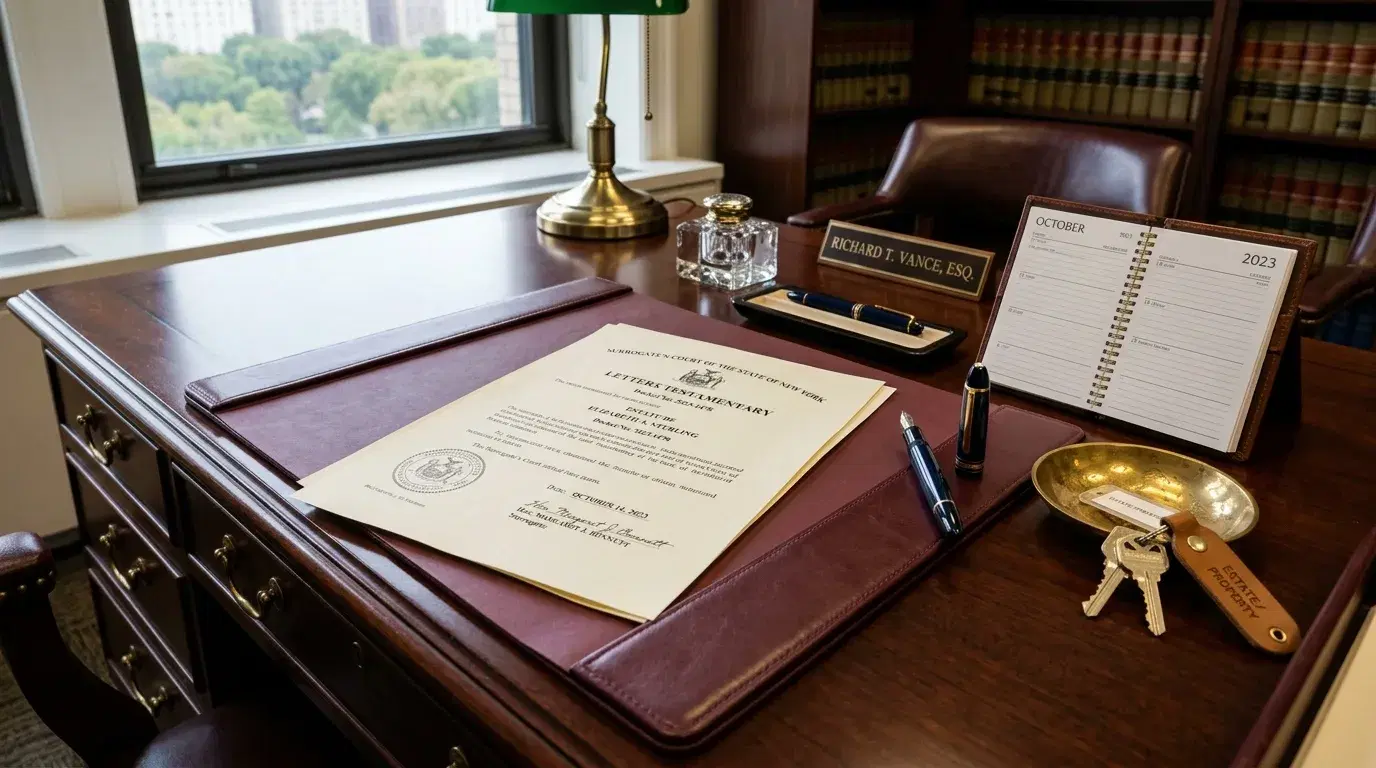
Week 1–2: File with the Surrogate's Court The executor files the original will and death certificate with the county Surrogate's Court. In New Jersey, this can often be done within days of the death. The Surrogate issues "Letters Testamentary" — the document that gives the executor legal authority to act on behalf of the estate.
Month 1–3: Notify Creditors and Beneficiaries New Jersey law requires the executor to notify all known creditors and beneficiaries. Creditors have a limited window to file claims against the estate. This period is non-negotiable — you can't skip it.
Month 3–6: Settle Debts and File Tax Returns Outstanding debts, final income taxes, and any estate tax obligations must be resolved before assets can be distributed. New Jersey eliminated its estate tax in 2018, but the federal estate tax still applies to estates over $13.61 million (2024 threshold). The NJ inheritance tax, however, still applies to certain beneficiaries.
Month 6–12+: Transfer Property and Close Once debts are settled and the court approves the accounting, the executor can transfer the property. If you're selling, you can often list the home during probate — but the closing typically can't happen until the court issues its final approval.
County-by-County Differences
Probate timelines vary significantly by county in New Jersey:
Faster counties (6–9 months for straightforward estates):
- Monmouth County (Freehold)
- Mercer County (Trenton)
- Somerset County (Somerville)
Average counties (9–12 months):
- Union County — Union County Surrogate's Court (2 Cherry Street / 2 Cherry St, Elizabeth, NJ 07202)
- Middlesex County (New Brunswick)
- Burlington County (Mount Holly)
- Ocean County (Toms River)
Slower counties (12–18+ months for complex estates):
- Essex County — Essex County Surrogate's Court (465 Dr. Martin Luther King Jr. Blvd, Newark, NJ 07102) — one of the busiest Surrogate's Courts in the state
- Hudson County (Jersey City) — high volume, complex urban estates
- Camden County (Camden)
These are general guidelines. A contested will, missing heirs, title issues, or a backlogged court can extend any timeline significantly.
What Causes Delays
The most common reasons probate takes longer than expected:
- No will (intestate estate): Without a will, the court must determine heirs under NJ intestacy law, which takes longer.
- Contested will: If any heir challenges the will's validity, the process can stretch to years.
- Outstanding liens or title issues: Unpaid taxes, mechanic's liens, or unclear title must be resolved before closing.
- Missing beneficiaries: The executor must make reasonable efforts to locate all heirs.
- Executor delays: An executor who is slow to file paperwork or respond to the court can add months to the process.
Can You Sell During Probate?
Yes — in most cases, you can list the property for sale while probate is ongoing. This is often a smart move because it gives you time to find the right buyer without rushing. However, the closing typically can't happen until the executor has legal authority to transfer title, which requires the court's approval.
In some cases, the court must approve the sale itself — particularly if the estate is insolvent or if there are disputes among heirs.
What You Should Do Right Now
If you've recently inherited a property in New Jersey, here are the most important steps:
- Locate the will and file it with the county Surrogate's Court promptly.
- Understand your carrying costs — taxes, insurance, mortgage — from day one.
- Get a property valuation so you know what you're working with.
- Consult with a real estate professional who understands estate sales before making any decisions.
Probate doesn't have to be overwhelming. With the right guidance, most families can navigate the process without losing money to unnecessary delays.
Ready to talk through your specific situation? Contact me today for a free, confidential consultation. I've helped families across New Jersey navigate inherited property decisions, and I'm here to help you too.
Need Help With Your Real Estate Situation?
Whether you've inherited a property, facing foreclosure, or need to sell as-is, I'm here to help. Get a free, no-obligation consultation today.
Related Articles
What Happens When You Inherit a House in New Jersey?
Learn about the probate process, your options as an heir, and how to make the best decision for your inherited property in New Jersey.
Case Study: Selling an Inherited Hoarder Property in Bayonne, NJ As-Is Off-Market
An out-of-state administrator inherited a heavy hoarder property in Bayonne needing major renovations. Here is the real story of how we sold it off-market for fair value, handled vacant property insurance issues, and resolved an underground oil tank contamination.
Selling a Hoarder House in New Jersey: What You Need to Know (And Why You Don't Have to Clean It Out First)
Believing you must clean out a hoarder house before selling is a costly mistake. Learn how as-is off-market options in Teaneck and Bergen County allow NJ families to sell without cleanouts, repairs, or public open houses.
Need Help With Your Real Estate Situation?
Let's discuss your specific needs in a free, no-pressure consultation.
Contact Jose Today